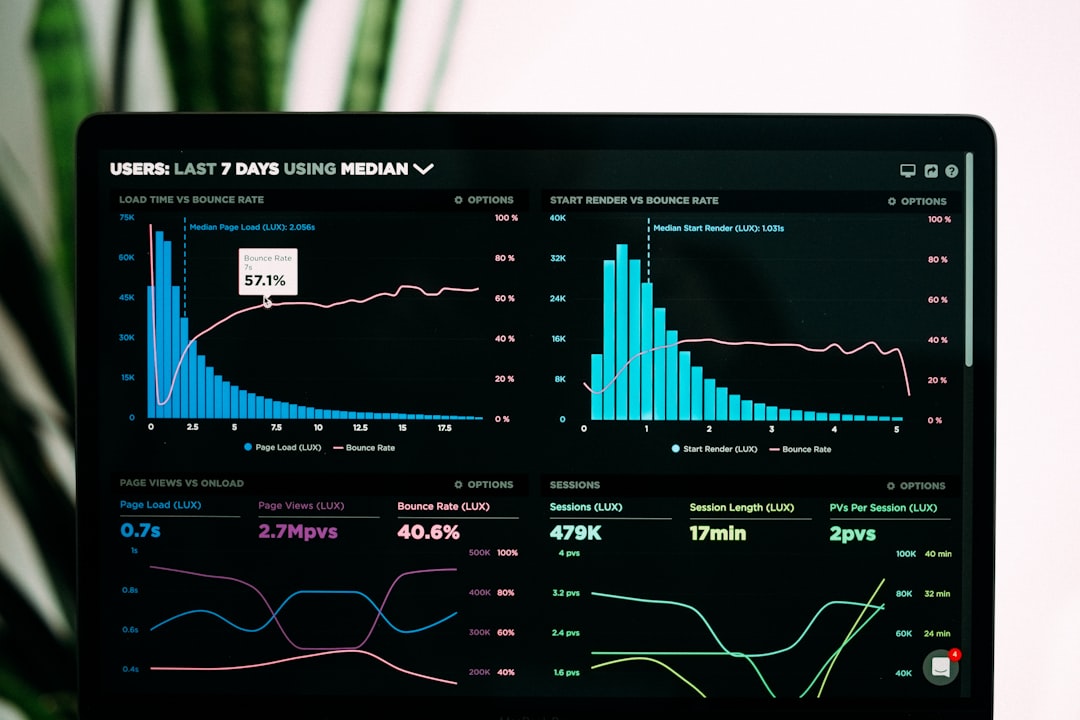
The 2026 Shift: Why Visual Literacy is the New Gold Standard
As we navigate the landscape of the PTE Academic in June 2026, the Pearson AI scoring engine has evolved. It no longer just listens for keywords; it evaluates the logical synthesis of visual data. Visual literacy—the ability to interpret, negotiate, and make meaning from information presented in the form of an image—has become the ultimate differentiator between a score of 79 and a perfect 90.
Today, test-takers are encountering more sophisticated infographics, multi-layered maps, and complex process diagrams than ever before. Success requires a strategic shift from simply 'describing what you see' to 'analyzing what it means.' This guide provides the definitive framework for mastering this skill.
Decoding the AI's Visual Understanding
In 2026, the PTE algorithm uses advanced neural networks to assess how well you link visual cues with spoken output. It looks for contextual relevance and structural cohesion. If you are still using generic templates from 2022, you are likely leaving points on the table. You need a dynamic approach that adapts to the complexity of the data presented.
The Three Pillars of the Visual Literacy Framework
To dominate the Speaking and Writing sections where visuals are prevalent, you must internalize three core pillars. These pillars ensure that your response is both comprehensive and concise, fitting perfectly within the 40-second recording window.
1. Pattern Identification (The 'Macro' View)
Before you speak a single word, you must identify the overall trend. Is the data fluctuating, stagnating, or accelerating? The AI rewards test-takers who can identify the 'story' behind the numbers rather than listing individual data points. Look for the highest peaks, the lowest troughs, and the most significant shifts.
2. Data Prioritization (The 'Triage' View)
With only 40 seconds to speak, you cannot mention everything. Visual literacy involves strategic omission. You must choose the three most impactful elements of the image. For a bar chart, this might be the largest category, the smallest category, and a notable comparison between two others. For a process diagram, it is the start, the transformation, and the end result.
3. Strategic Synthesis (The 'Output' View)
This is where you combine your observations into a coherent narrative. Use logical connectors to bridge your ideas. Instead of saying 'The blue bar is high. The red bar is low,' you should say, 'In stark contrast to the blue bar, the red bar demonstrates a significant decline.' This shows the AI that you understand the relationship between the data points.
Pro Tip: Spend the first 5 seconds of your 25-second preparation time identifying the 'extreme' values in any graph. These are your safest bets for high-scoring content points.
Mastering the 'Describe Image' Section: A Step-by-Step Guide
The 'Describe Image' task is the ultimate test of your visual literacy. To achieve a 90, follow this high-impact structure that satisfies both the content and oral fluency requirements of the PTE Academic 2026.
The Introduction: Beyond the Title
Many students simply read the title of the graph. While this is a safe start, an elite test-taker adds context. If the graph is titled 'Annual Coffee Consumption,' your intro should be: 'This informative line graph illustrates the fluctuating trends in annual coffee consumption across various regions between 2020 and 2026.'
The Body: Selecting High-Impact Information
Focus on 'The Big Three': The Maximum, The Minimum, and The Change. Use precise academic vocabulary to describe these. Do not just say 'goes up'; use terms like 'surged,' 'climbed,' or 'reached a pinnacle.' For decreases, use 'plummeted,' 'diminished,' or 'hit a nadir.'
The Conclusion: The Predictive Edge
A strong conclusion summarizes the main takeaway or offers a logical prediction based on the data. For example: 'In conclusion, the data suggests a continued upward trajectory for coffee consumption in the coming years.' This demonstrates a high level of English proficiency and cognitive synthesis.
Advanced Vocabulary for Data Interpretation
To reach the 90-score bracket, your lexical resource must be diverse. Avoid repetition at all costs. Here are some essential word pairings for visual description:
- Fluctuation: 'The data exhibited a volatile trend...'
- Stability: 'The figures remained relatively stagnant/plateaued...'
- Comparison: 'A striking disparity is evident between...'
- Correlation: 'There is a direct positive correlation between X and Y...'
- Proportion: 'A significant majority of the respondents...'
Using these terms naturally will significantly boost your 'Vocabulary' and 'Content' scores in the AI's evaluation matrix.
Integrating Visuals in Re-tell Lecture
In the PTE Academic 2026, 'Re-tell Lecture' often includes a supportive slide or image. Many students ignore this, but it is a goldmine for score multiplication. The visual is often a summary of the lecture's core argument.
Use the visual to anchor your notes. If the speaker mentions a 'downward trend' and you see a falling line on the slide, you have confirmed a key point. Mentioning the visual explicitly—e.g., 'As depicted in the accompanying slide, the environmental impact is twofold'—shows the AI that you are engaging with the multi-modal nature of the task.
Common Mistakes That Kill Your Visual Score
Even high-level candidates fall into these traps. Avoid them to ensure your score remains in the 80-90 range:
- The 'Laundry List' Approach: Listing every single number on the screen. This destroys your oral fluency and confuses the AI.
- Dead Air: Pausing for more than 3 seconds while trying to interpret a complex map. If you get stuck, move to the next visible feature immediately.
- Mislabeling Units: Saying 'percent' when the graph shows 'millions.' Precision is key to the content score.
- Lack of Conclusion: Finishing abruptly when the timer runs out. Always keep an eye on the clock and start your conclusion at the 30-second mark.
Expert Insight: In 2026, the PTE AI is highly sensitive to 'hesitation markers' like 'um' and 'ah' during Describe Image. It is better to state a slightly inaccurate data point with confidence than to hesitate while looking for the exact number.
The MyTOEFL.io 7-Day Visual Mastery Drill
If your exam is approaching, implement this rapid-fire drill to sharpen your visual literacy skills:
- Day 1-2: Practice 20 'Describe Image' tasks focusing only on identifying the 'Maximum' and 'Minimum' within 5 seconds.
- Day 3-4: Record yourself describing 10 complex maps and flowcharts. Focus on using directional language (North, South, Clockwise, Subsequent to).
- Day 5-6: Watch TED-Ed videos without sound and try to narrate the visuals. This builds the 'Visual-to-Speech' neural pathway.
- Day 7: Take a full scored mock test on MyTOEFL.io to calibrate your performance against the latest 2026 AI scoring standards.
Conclusion: Your Path to a 90 Starts Here
Mastering visual literacy is not about being a mathematician; it is about being a strategic communicator. By applying the Visual Literacy Framework—identifying patterns, prioritizing data, and synthesizing your output—you position yourself as an elite candidate in the eyes of the PTE AI. The 2026 exam demands this level of sophistication, and with the right practice, you can achieve it.
Ready to put these strategies to the test? Head over to MyTOEFL.io now to access our cutting-edge PTE Academic 2026 practice platform. Our AI-driven feedback will tell you exactly how your visual descriptions measure up against the 90-score benchmark. Don't leave your future to chance—practice with the best and secure your success today!
Photo by Luke Chesser on Unsplash
Found this helpful?
Share this strategy with your fellow studiers.