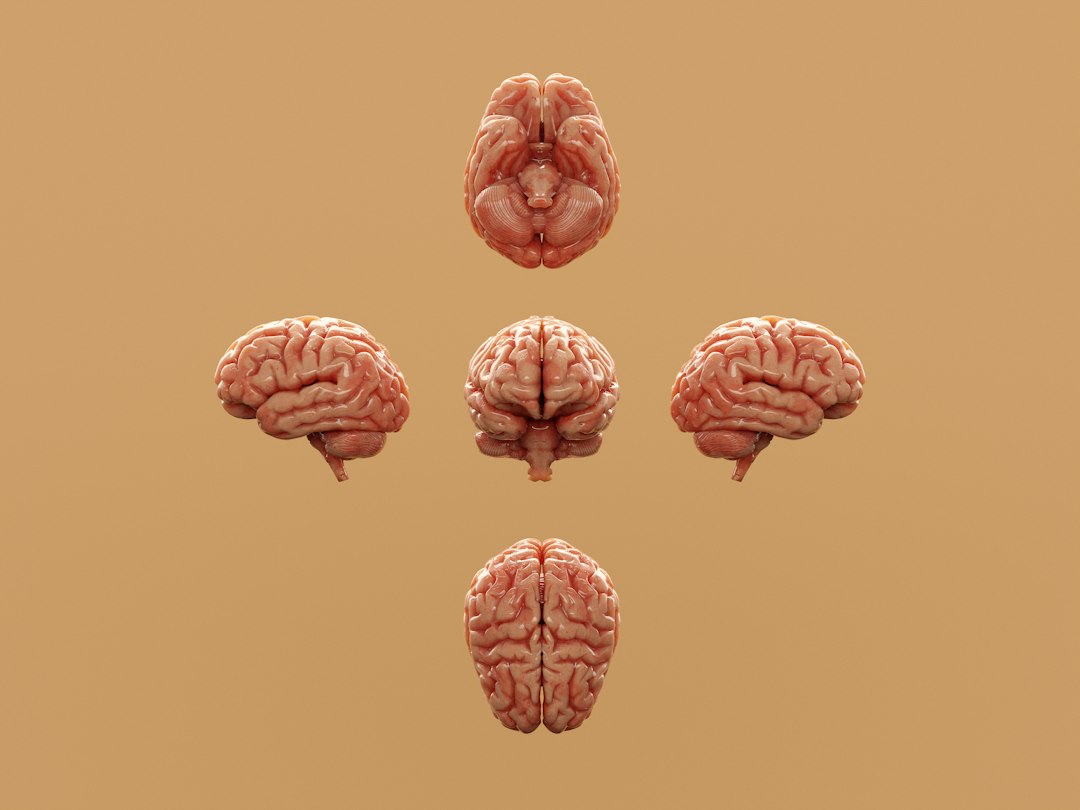
The Hidden Engine of High-Scoring TOEFL iBT Candidates
As we navigate the competitive landscape of July 2026, the TOEFL iBT has evolved into more than just a test of linguistic proficiency. It is now a test of cognitive management. While thousands of students memorize vocabulary lists and practice templates, the elite 1%—those consistently scoring 115 to 120—utilize a psychological edge known as Meta-Cognitive Monitoring.
Meta-cognition is, simply put, thinking about your thinking. In the context of the TOEFL iBT, it is the ability to monitor your own comprehension and performance in real-time. It is the internal coach that whispers, 'You missed the nuance in that lecture,' or 'Your current sentence structure is becoming too convoluted.' By mastering this skill, you transform from a passive test-taker into a dynamic problem-solver.
Meta-Cognitive Monitoring is the difference between realizing you made a mistake after the exam and correcting that mistake while the timer is still running.
Understanding the Meta-Cognitive Loop
To master this strategy for the TOEFL iBT, you must understand the three-step loop: Planning, Monitoring, and Evaluating. In 2026, where the exam's adaptive elements and AI-driven scoring demand higher precision, this loop ensures that every second of your effort is optimized for maximum points.
- Planning: Assessing the task requirements before you begin (e.g., identifying the specific goal of a Writing for Academic Discussion prompt).
- Monitoring: Tracking your progress while performing the task (e.g., noticing if your Speaking response is drifting off-topic).
- Evaluating: Quickly judging the quality of your output and making immediate micro-adjustments.
1. Meta-Cognitive Monitoring in the Reading Section
Many students fail the Reading section not because they don't know the words, but because they lose track of the passage's logical flow. Meta-cognitive monitoring involves 'Checking for Understanding' after every paragraph. If you finish a paragraph and can’t summarize it in five words, your monitor should trigger a 're-read' signal immediately.
In 2026, TOEFL iBT reading passages often include complex inter-disciplinary relationships. Use your meta-cognitive coach to ask: 'How does this evidence support the theory mentioned in the first paragraph?' If you can’t answer, you haven't truly read the text; you've only scanned the words. This internal check prevents the common mistake of reaching the final 'Summary' question with no clear mental map of the text.
2. The Listening Section: Detecting Nuance and Tone
The TOEFL iBT Listening section in 2026 places a heavy emphasis on pragmatics—understanding the speaker's purpose and attitude. Meta-cognitive monitoring here means listening for 'Signpost Words' and evaluating your own focus. If you find your mind wandering during a long lecture on marine biology, your monitor must pull you back by identifying the specific transition the professor just made.
Expert Tip: When taking notes, use a section of your scratch paper to track your 'certainty level.' If you hear a point you are unsure of, mark it with a small question mark. This meta-cognitive tag reminds you to be extra cautious when answering questions related to that specific segment of the lecture.
3. The Speaking Section: Real-Time Fluency Repair
This is where meta-cognitive monitoring is most visible. In the Speaking section, elite candidates use their internal monitor to manage their pacing. If you realize you have spent 30 seconds on the first point of an integrated task, your monitor should signal you to transition immediately to the second point to ensure a balanced response.
Furthermore, meta-cognition allows for 'Self-Correction' without losing points for fluency. If you catch a grammatical error, a quick, natural correction actually demonstrates higher linguistic control to the AI graders. The key is the 'Monitoring Speed'—the faster you recognize the slip, the less it impacts your overall flow.
"Successful speakers don't just talk; they listen to themselves while they talk. This dual-processing is the hallmark of advanced English fluency."
4. Writing for Academic Discussion: Strategic Calibration
In the Writing for Academic Discussion task, you are participating in a simulated digital classroom. Meta-cognitive monitoring allows you to evaluate your contribution relative to the other 'students' in the prompt. Are you merely repeating what 'Student A' said, or are you adding a unique perspective? Your internal monitor should be asking: 'Does this sentence add value or is it filler?'
By 2026 standards, filler text is heavily penalized by the TOEFL iBT scoring algorithms. Use meta-cognitive checks to ensure that every sentence serves a rhetorical purpose. Before you hit submit, do a 30-second 'Logic Scan.' Check the transition between your claim and your supporting evidence. If the link isn't crystal clear, your monitor should prompt a quick rewrite of the connective phrasing.
How to Train Your Meta-Cognitive Monitor
You cannot simply decide to be meta-cognitive; you must train the neural pathways. Here are three science-backed exercises to prepare for your TOEFL iBT:
- The 'Think Aloud' Protocol: When practicing Reading or Listening on MyTOEFL.io, speak your thought process out loud. Explain *why* you are choosing an answer and *why* you are rejecting others. This externalizes the internal monitor.
- Post-Session Audits: After every practice test, don't just look at the score. Analyze your 'Error Patterns.' Did you get questions wrong because of a lack of knowledge or a failure of monitoring? Identifying the 'Why' is the highest form of meta-cognition.
- Timed Pressure Drills: Meta-cognition often breaks down under stress. Practice with shorter timers than the actual exam. This forces your monitor to work at double-speed, making the actual TOEFL iBT feel slow and manageable by comparison.
The 2026 Advantage: Why Now?
The 2026 testing environment is more data-driven than ever. Universities are looking for students who can handle high-level academic discourse and show cognitive resilience. By showcasing Meta-Cognitive Monitoring, you aren't just passing a test; you are proving you have the mental architecture for Ivy League success. This skill is the ultimate differentiator in an era of AI-assisted learning.
Conclusion: Your Path to 120
Mastering the TOEFL iBT requires a shift in perspective. Stop viewing it as a series of questions and start viewing it as a performance that requires active, real-time management. Meta-cognitive monitoring is the tool that allows you to maintain composure, ensure accuracy, and maximize your potential across all four sections.
Ready to put these strategies into practice? At MyTOEFL.io, our advanced simulation platform is designed to help you develop these high-level cognitive skills. Through our detailed feedback loops and 2026-updated practice materials, you can sharpen your internal monitor and walk into the testing center with the confidence of a 120-scorer.
Don't just study hard—study smart. Start your journey to a perfect TOEFL iBT score today at MyTOEFL.io.
Photo by Aakash Dhage on Unsplash
Found this helpful?
Share this strategy with your fellow studiers.