Introduction: The New Era of PTE Academic Scoring
As of June 15, 2026, the PTE Academic exam remains the world's most sophisticated AI-driven English proficiency test. For candidates aiming for a perfect 90, understanding the English language is no longer enough. You must understand the machine logic that evaluates you.
The 2026 iteration of the Pearson algorithm has become significantly more adept at identifying natural speech patterns and nuanced writing structures. However, it still operates on a set of mathematical parameters that can be navigated with precision. This guide will move beyond basic grammar and vocabulary to explore the AI-Scoring Optimization Strategy—the definitive blueprint for high-tier success.
Cracking the 2026 Algorithm: How the AI Processes Your Input
The PTE Academic AI does not 'hear' or 'read' in the way a human examiner does. Instead, it converts your voice and text into data points, comparing them against a vast database of native and non-native benchmarks. To optimize your score, you must provide data that the algorithm recognizes as high-competency indicators.
In 2026, the focus has shifted toward contextual consistency. The AI now tracks how well your vocabulary choices align with the specific academic domain of the prompt. If you are discussing 'quantum mechanics,' the algorithm expects a specific cluster of semantic markers. Failing to provide these, even with perfect grammar, can cap your score at a 79.
The key to a 90 is not just avoiding errors; it is feeding the algorithm the specific data markers it is programmed to reward.
Acoustic Calibration: Speaking to the AI Engine
In the Speaking section, particularly Read Aloud and Describe Image, the AI prioritizes Oral Fluency and Pronunciation. However, many students misunderstand these terms. In 2026, 'Fluency' refers to a consistent speech rate of approximately 130-150 words per minute, free from unnatural hesitations.
The Frequency and Resonance Factor
The scoring engine uses acoustic modeling to analyze your voice's clarity. To optimize this, you must maintain a steady volume and avoid 'upspeak'—the tendency to raise your pitch at the end of sentences. A flat, authoritative academic tone provides the clearest waveform for the AI to parse.
- Steady Airflow: Do not break the flow of air between words. The AI looks for continuous sound segments.
- Phonetic Precision: Focus on vowel clarity. The 2026 update is particularly sensitive to 'shwa' sounds and diphthongs.
- Micro-Pausing: Only pause at punctuation. A pause in the middle of a phrase is flagged as a cognitive struggle by the algorithm.
The NLP Matrix: Writing for Algorithmic Success
Writing in the PTE Academic 2026 requires a balance of Lexical Density and Syntactic Complexity. The Natural Language Processing (NLP) engine evaluates your essay based on how many 'high-value' academic words you use in relation to 'function' words like 'the' or 'and'.
To achieve a 90, your essay must demonstrate a hierarchical structure. Start with broad thematic statements and narrow down to specific evidence. The AI tracks this logical flow through your use of cohesive devices. However, avoid 'template fatigue.' The 2026 algorithm can now detect overused, rigid templates and may penalize for lack of 'originality' in structure.
Optimizing Word Choice for the 2026 Engine
Instead of using common verbs like 'show' or 'think,' utilize high-impact academic alternatives like 'illustrate,' 'postulate,' or 'corroborate.' The AI assigns a higher weight to these terms because they are statistically more frequent in high-level academic journals.
Reading Logic: The Semantic Mapping Strategy
The Reading section, especially 'Fill in the Blanks,' is often the graveyard of high scores. The AI evaluates these tasks based on Collocation Strength and Contextual Inference. You are not just being tested on vocabulary; you are being tested on your ability to recognize which words 'belong' together in a professional context.
When approaching these questions, use the 'Semantic Mapping' technique. Before looking at the options, identify the field of study (e.g., Biology, Economics, Sociology). This activates the relevant mental lexicon and helps you predict the academic collocations the AI expects. For instance, in an Economics text, the word 'market' is frequently followed by 'fluctuations' or 'equilibrium.'
Professional Tip: If you are stuck between two synonyms, choose the one that is more formal. The PTE Academic AI is biased toward a formal register.
Listening Strategy: Managing Cognitive Bandwidth
The Listening section in 2026 features more diverse accents and background noise to simulate real-world academic environments. The AI-scoring for 'Summarize Spoken Text' focuses heavily on Content Accuracy and Keyword Extraction.
Your goal should be to capture 5-7 'Core Concept' keywords. The AI has a pre-determined list of essential terms for each audio clip. If your summary contains these keywords in a grammatically correct structure, you will receive full points, regardless of how 'beautiful' your prose is. Focus on nouns and verbs, as these carry the heaviest scoring weight.
The "Human-AI" Hybrid Approach for a 90
The ultimate secret to a 90 in 2026 is the Hybrid Approach. This means speaking and writing in a way that feels natural to a human ear but is mathematically optimized for a machine. This involves:
- Controlled Speed: Fast enough to prove fluency, slow enough for phonetic clarity.
- Strategic Redundancy: Using synonyms to reinforce the main topic, ensuring the AI registers the 'Content' score.
- Grammar Safety: Using complex structures (subordinate clauses) only when you are 100% sure of their accuracy. The AI penalizes a failed complex sentence more than a successful simple one.
Conclusion: Future-Proofing Your PTE Success
The PTE Academic is a predictable system. By applying the AI-Scoring Optimization Strategy, you stop guessing and start performing with mathematical certainty. The landscape of 2026 demands a candidate who is part-linguist and part-strategist.
Are you ready to see how your current performance stacks up against the 2026 AI requirements? Do not leave your future to chance. Visit MyTOEFL.io today to use our state-of-the-art PTE score simulators. Our platform uses the same algorithmic logic as the actual exam, providing you with the precise feedback needed to bridge the gap between a 79 and a perfect 90. Your journey to global success starts with a single, optimized step. Start practicing now!
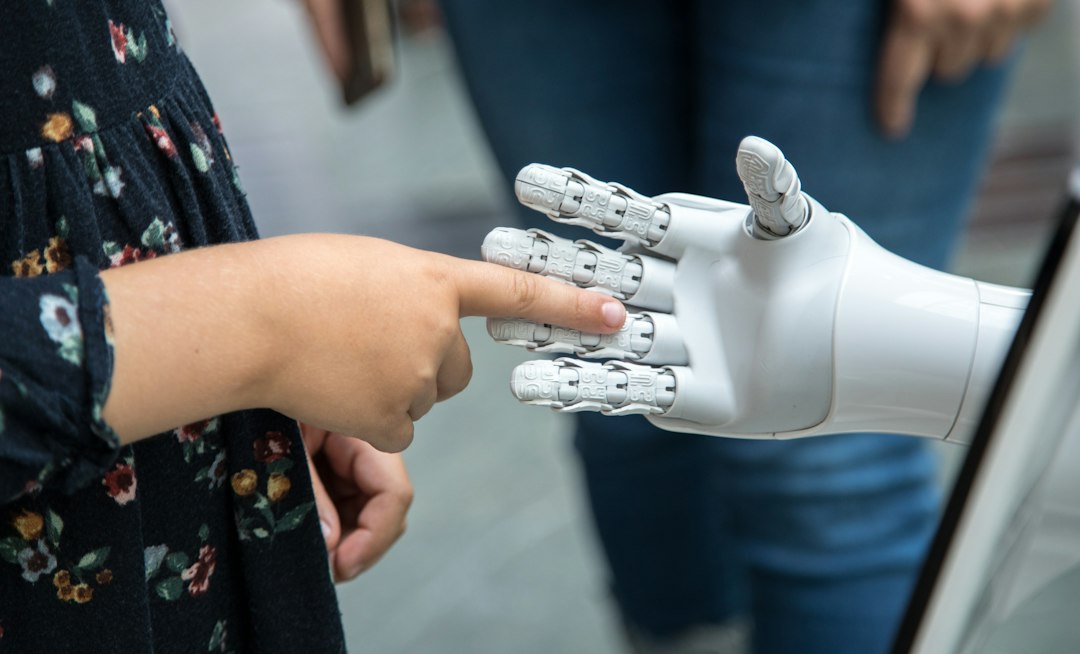
Photo by Katja Ano on Unsplash
Found this helpful?
Share this strategy with your fellow studiers.