The Evolution of PTE Academic Assessment in 2026
As we navigate the mid-point of 2026, the landscape of English proficiency testing has undergone a seismic shift. The PTE Academic exam, powered by Pearson’s most advanced AI scoring engine to date, has moved beyond simple keyword recognition. Today, the algorithm prioritizes what experts call 'Micro-Skill Mastery'—the ability to execute granular linguistic tasks with near-native precision.
For test-takers aiming for a score of 79 or 90, traditional study methods are no longer sufficient. You cannot simply 'template' your way to success anymore. The 2026 version of the PTE Academic demands a deeper integration of listening, speaking, reading, and writing. This blueprint will break down the essential micro-skills you need to dominate the exam this year.
What Exactly is Micro-Skill Mastery?
Micro-skills are the invisible threads that hold your overall performance together. While a macro-skill might be 'Speaking,' the micro-skills include phonemic clarity, word-level stress, and the avoidance of intrusive hesitations. In the Writing section, it’s not just about grammar; it’s about collocation speed and the logical progression of ideas at the sentence level.
The Pearson AI doesn't just hear your words; it analyzes the rhythmic frequency and the lexical density of your responses. Mastery at the micro-level is what separates the average from the elite.
1. Oral Fluency: Decoding the Rhythmical Blueprint
In 2026, the PTE Academic speaking modules (Read Aloud, Repeat Sentence, Retell Lecture) have become more sensitive to 'chunking.' The AI now penalizes students who speak too fast without regard for natural pauses. To master this micro-skill, you must focus on the 'Schwa' sound and content word emphasis.
- Content Word Stress: Identify the nouns, verbs, and adjectives. Give them slightly more volume and duration.
- Phonemic Clarity: Ensure your 'th' and 'v' sounds are distinct, as the 2026 algorithm is highly tuned to consonant clarity.
- Intonation Mapping: Use a rising intonation for questions and a falling intonation for statements to signal communicative intent.
2. The 'Collocation Speed' Advantage in Reading
The Reading and Writing: Fill in the Blanks (FIB) tasks are the highest-weighted items in the PTE Academic. The micro-skill here is 'Collocation Speed'—the ability to instantly recognize which words habitually go together. In 2026, the exam uses more academic journals and technical reports than ever before.
To improve this, you should practice 'wide reading' of scientific abstracts. When you see the word 'comprehensive,' your brain should immediately anticipate words like 'research,' 'study,' or 'analysis.' This predictive processing reduces cognitive load and increases accuracy significantly.
The Integrated Listening Strategy: Selective Processing
Listening in the PTE Academic is no longer just about catching every word. It’s about 'Selective Information Processing.' In tasks like Summarize Spoken Text, the AI evaluates how well you can distinguish between 'Core Thesis' and 'Supporting Evidence.'
Micro-Skills for Listening Success:
- Keyword Filtering: Ignoring 'filler' words and focusing on signposting language (e.g., 'subsequently,' 'nevertheless').
- Phonetic Encoding: In Write From Dictation, the ability to hold a string of 12-15 words in short-term memory using phonetic markers.
- Accent Adaptation: The 2026 exam features a wider variety of regional accents, including Singaporean and Indian English. Exposure is key.
Pro Tip: When practicing Write From Dictation, focus on the first letter of each word to create a visual anchor before the sentence ends.
Writing with Structural Cohesion and Lexical Density
The PTE Academic Writing section (Summarize Written Text and Essay) has seen a shift toward rewarding 'Lexical Density.' This means using more content-carrying words per sentence. Instead of saying 'The government made a plan to help the environment,' use 'The government implemented a strategic environmental initiative.'
Structural cohesion is another vital micro-skill. This involves the use of anaphoric and cataphoric references. Using pronouns like 'this,' 'these,' and 'it' correctly to refer back to complex ideas shows the AI that you have a sophisticated command of English discourse structure.
A 4-Step Daily Routine for Micro-Skill Development
To reach a 90 on the PTE Academic, your preparation must be surgical. Follow this daily routine to sharpen your micro-skills:
- Morning (15 mins): Shadowing exercise. Listen to a TED talk and repeat the speaker’s exact rhythm and intonation.
- Mid-day (20 mins): Collocation drills. Use the MyTOEFL.io 'Smart-Bank' to practice 50 Fill-in-the-Blanks.
- Evening (20 mins): Transcription practice. Listen to a 10-second clip and write it down perfectly, focusing on spelling and punctuation.
- Night (15 mins): Review your 'Error Log' on MyTOEFL.io to identify which specific micro-skill (e.g., 's/es' endings) you missed.
Why MyTOEFL.io is Your Secret Weapon in 2026
At MyTOEFL.io, we have reverse-engineered the 2026 PTE Academic scoring algorithm. Our platform doesn't just give you a practice score; it provides a 'Micro-Skill Breakdown.' We tell you exactly where your fluency is dropping and which specific grammar rules are costing you points.
Our AI feedback loop mirrors the Pearson environment, ensuring that when you sit for the actual exam, there are no surprises. Whether you are struggling with the 'Describe Image' nuances or the 'Summarize Spoken Text' logic, our tools are designed to bridge that gap.
Conclusion: Turning Strategy into Success
Success in the PTE Academic in 2026 is a game of millimeters. By shifting your focus from 'General English' to 'Micro-Skill Mastery,' you position yourself ahead of 95% of other test-takers. Remember, the AI is looking for consistency, clarity, and academic rigor. Master the small things, and the big score will follow.
Ready to see where your micro-skills stand? Head over to MyTOEFL.io now and take our 2026 Diagnostic Mock Test. Get instant, AI-driven feedback and start your journey toward a perfect 90 today!
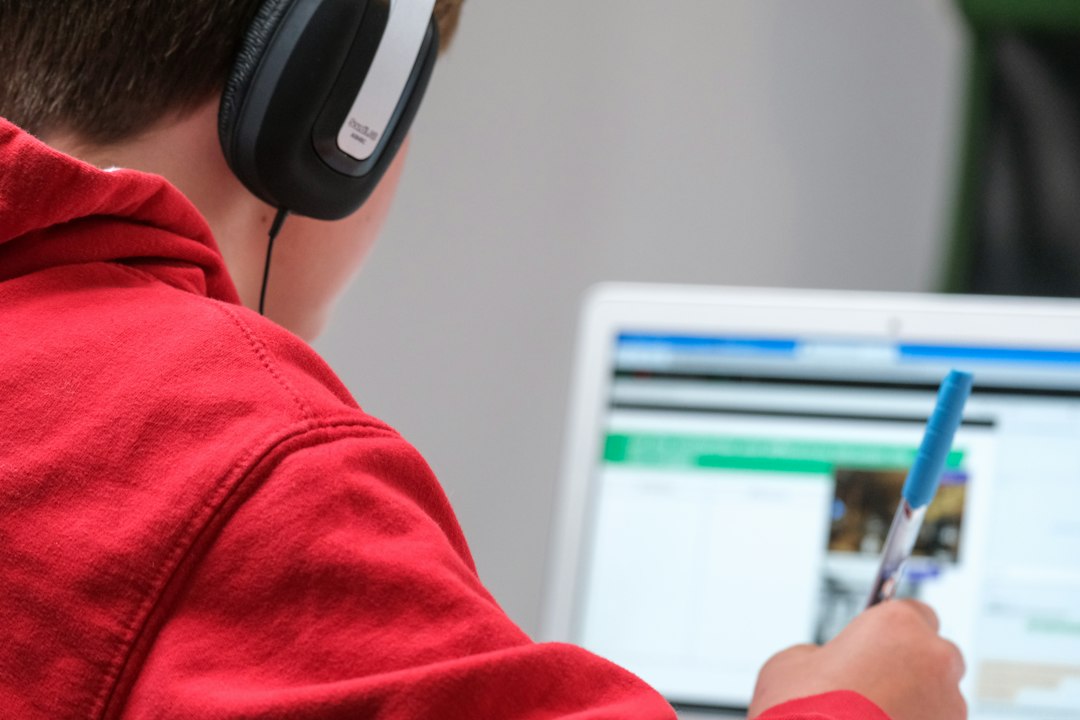
Photo by Compare Fibre on Unsplash
Found this helpful?
Share this strategy with your fellow studiers.