Introduction: Why Preparation Isn't Enough for the PTE Academic in 2026
In the high-stakes world of international education, the PTE Academic exam remains the gold standard for assessing English proficiency through AI-driven precision. However, a common trend has emerged in mid-2026: students who excel in individual practice modules often see a significant score drop on test day. Why does this happen? The answer lies in the 'Performance Gap'—the psychological and technical chasm between relaxed study and the pressurized environment of the actual exam center.
To overcome this, elite candidates are moving beyond simple rote memorization. They are adopting the Ultimate Holistic Simulation Method. This strategy isn't just about knowing the answers; it is about conditioning your brain and body to respond to the specific algorithmic triggers of the PTE Pearson AI under maximum stress. By the end of this guide, you will understand how to transform your study space into a high-fidelity simulation of the 2026 testing environment.
Professional Tip: The PTE AI does not just measure what you know; it measures how consistently you apply that knowledge under a strict, unyielding ticking clock.
The Three Pillars of the Holistic Simulation Method
Effective simulation is more than just taking a mock test. It involves a three-dimensional approach: Environmental Replication, Cognitive Stamina, and Algorithmic Alignment. Each pillar must be mastered to ensure that your practice scores translate directly to your final Pearson report.
1. Environmental Replication: Beyond the Quiet Room
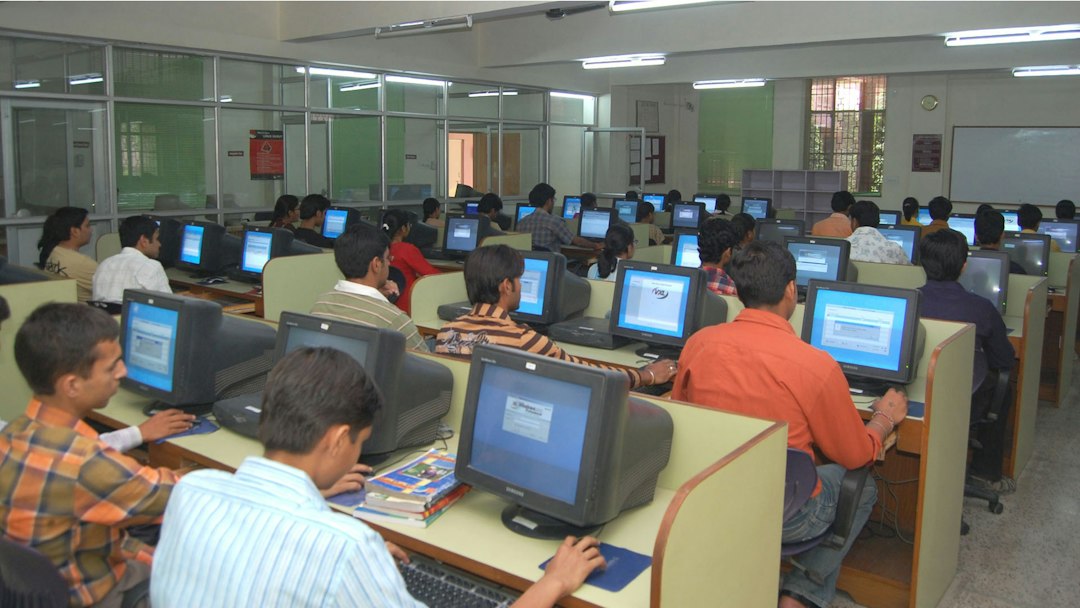
One of the biggest shocks for PTE Academic test-takers is the noise level in the speaking section. In a real exam center, dozen of other students are speaking simultaneously. If you have only practiced in a silent bedroom, your concentration will shatter the moment the 'Describe Image' prompt appears.
- Ambient Noise Training: Practice your speaking modules with 'Exam Center Background Noise' playing through your speakers. This desensitizes your brain to external chatter.
- Hardware Consistency: Ensure you are using a wired headset with a microphone positioned exactly two fingers' width from your mouth—the standard Pearson recommendation.
- Single-Take Discipline: Never allow yourself to hit 'pause' or 'restart' during a practice session. In the PTE Academic, there are no second chances.
2. Cognitive Stamina: The 2-Hour Focus Loop
The PTE Academic is a marathon of the mind. Many students experience a 'Reading Slump' because their brains are fatigued after the intense Speaking and Writing sections. The Holistic Simulation Method requires you to perform full-length, back-to-back sessions at least twice a week.
By training in 120-minute blocks without distraction, you build the neural endurance necessary to handle complex 'Fill in the Blanks' questions even when your mental energy is waning. This is where the difference between a 79 and a 90 is made.
Mastering the Speaking Module: The 'Zero-Hesitation' Logic
In 2026, the PTE AI has become even more sophisticated at detecting 'naturalness.' This doesn't mean you need to sound like a BBC newsreader; it means you need to avoid the 'robotic pause.' Our simulation method emphasizes the Continuous Flow Protocol.
Describe Image and Retell Lecture
When simulating these tasks, don't aim for 100% factual accuracy at the expense of fluency. The AI prioritizes oral fluency and pronunciation over the granular details of a graph. In your simulation, if you stumble, you must learn to 'pivot'—using filler phrases like 'Furthermore, the data suggests' to maintain your rhythm while your brain catches up.
Expert Insight: A smooth delivery with 70% content accuracy will almost always outscore a broken, hesitant delivery with 100% accuracy.
Writing with Algorithmic Precision
The 2026 PTE Academic Writing section rewards structural cohesion and lexical diversity. However, the simulation of the 'Write Essay' task should focus on Time-Blocking. You have 20 minutes. A simulated session should be broken down as follows:
- Planning (2 Minutes): Identify the prompt type and map out your two main body arguments.
- Drafting (15 Minutes): Use a pre-internalized template to ensure you hit all grammatical markers while injecting topic-specific vocabulary.
- Editing (3 Minutes): This is the most skipped step in simulation. Use this time to hunt for 'S-V' agreement errors and spelling mistakes that the AI penalizes heavily.
The Reading & Listening Integration Strategy
In the PTE Academic, modules are rarely isolated. Your listening skills feed your writing (Write from Dictation), and your reading skills feed your speaking (Read Aloud). The Holistic Simulation Method treats these as a single ecosystem.
The 'Write From Dictation' Memory Buffer
This is arguably the most important task in the entire exam. During your simulation, practice the 'Initial Letter Technique.' Instead of trying to write full words while the speaker is talking, write only the first letter of each word. Once the audio stops, use your short-term memory buffer to reconstruct the full sentence. This technique, when simulated repeatedly, becomes an automated reflex.
Reading: The Contextual Prediction Method
For 'Fill in the Blanks (Reading & Writing),' simulation should focus on collocations. The 2026 AI looks for words that naturally live together. During your practice, don't just look for the 'right' word; look for the word that 'fits' the academic register of the surrounding text.
Analyzing Simulation Data: The Post-Mortem Phase
Taking a mock test is only 50% of the work. The other 50% is the 'Post-Mortem.' After every simulated session on MyTOEFL.io, you must analyze your data points. Are you losing marks on 'Form' in the essay? Is your 'Content' score low in Retell Lecture? Use these analytics to pivot your focus for the next 48 hours of study.
Identifying Your 'Red Zones'
A 'Red Zone' is any task where you consistently score below your target. If 'Re-order Paragraphs' is your Red Zone, your next simulation should include a 'Deep Dive' where you solve 20 of these problems consecutively to identify the logical patterns you are missing.
Psychological Conditioning for Test Day
The final layer of the Ultimate Holistic Simulation Method is the mental game. High-stakes testing triggers a 'fight or flight' response, which can lead to 'blanking.' To counter this, elite students use Box Breathing between sections. During your home simulations, practice taking four deep breaths the moment the 'Instruction' screen appears. This anchors your nervous system and keeps your prefrontal cortex—the part of the brain responsible for language—online and active.
Conclusion: Your Roadmap to a 90
The PTE Academic in 2026 is a test of both language and logic. By adopting the Ultimate Holistic Simulation Method, you are no longer just a student; you are a high-performance athlete preparing for a digital arena. You have the tools, the strategy, and the technical insights. Now, it is time to put them into practice.
Do not leave your future to chance. Every minute you spend in a high-fidelity simulation is a minute closer to your dream score. Start your journey today by utilizing the advanced AI-scoring tools and realistic mock environments available on our platform.
Ready to Conquer the PTE Academic?
Don't just study—simulate. Visit MyTOEFL.io now to access our 2026-updated PTE practice modules, real-time AI feedback, and full-length simulation exams designed to push you to a 90. Your success starts with the right strategy. Let's get to work.
Photo by sunrise University on Unsplash
Found this helpful?
Share this strategy with your fellow studiers.